
Xiamen Gachn International Co., Ltd. (GACHN Group) is pleased to present a practical selection guide for its in-cargo intelligent truck loading machine — the system already operating in more than 300 plants across the cement, chemical, fertilizer, grain and mineral processing industries. Because loading is the last process inside the plant and the first process in the customer's supply chain, the configuration agreed at the quotation stage fixes the plant's loading labour cost, bag breakage loss and truck cycle time for years to come. This guide works through the five decisions that matter most: capacity sizing, bag and truck matching, site preparation, automation and safety configuration, and payback calculation.
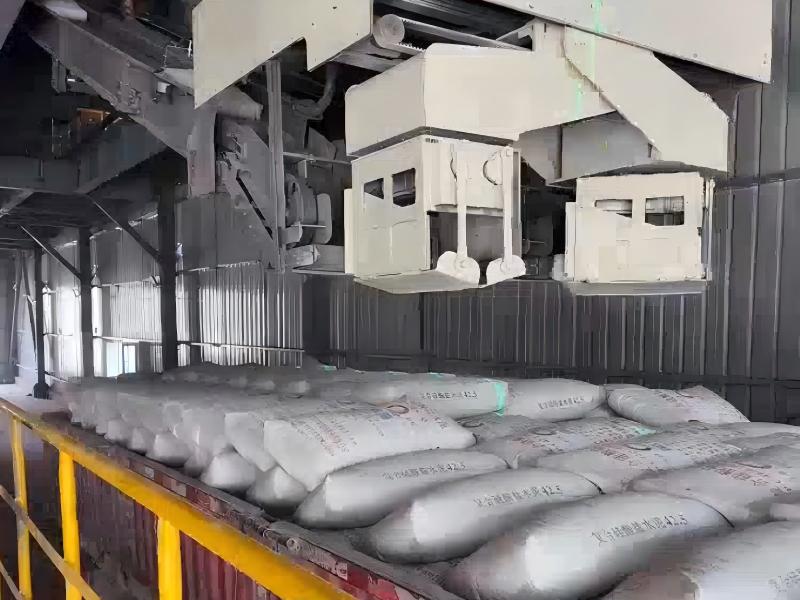
A truck loading machine cannot be selected on tonnage alone. Two plants with identical daily output can reach very different results if one matches the machine to its real bag mix, vehicle fleet and shipping peaks while the other does not.
Gachn's published reference figures for the in-cargo intelligent loading machine show what is at stake:
At a leading cement enterprise in Shandong, daily shipment rose from 1,200 tons to 2,200 tons after the loading system was introduced, and average truck waiting time fell from 4 hours to under 20 minutes. Typical equipment cost recovery is within 12 months. The five steps below explain how each of those numbers is produced at the selection stage.
Sizing starts from your peak shipping day, not your average day:
2,000 t ÷ 16 h × 1.2 = 150 t/h of required capacity. Because one in-cargo loading machine delivers a stable 95–120 t/h, that demand is met either by extending the loading window or by running a second bay. Expressed in vehicles, the figure is easier for the logistics team to check: at 95–120 t/h, a 40-ton truck is cleared in roughly 20–25 minutes.
Two checks worth doing before you commit:
Compatibility is the second decision, and it is where most overseas projects gain or lose time.
The Automatic bagged cement palletizing and loading machine handles the mainstream 25–50 kg bagged products used in cement, dry mortar, putty powder, chemical powders and granules, fertilizers, feed, flour, grain, carbon black, industrial salts and mineral powders, with bag length adaptability from 300 mm to 1,200 mm, and it supports both valve sacks and open-mouth bags.
On the vehicle side, a 3D radar scanning system completes a full compartment model in under 50 seconds and identifies the vehicle's length, width and side-wall height automatically. That covers high-sided trucks, flatbeds, vans, containers and customized agricultural vehicles — the last category matters in markets where third-party fleets use non-standard equipment.
The in-cargo design places the machine head inside the compartment itself and drops bags from a height of only 40–60 cm, which is what keeps breakage below 0.1% even for fragile or moisture-sensitive products. For fleets built around box-type bodies or platform trucks, the loading head and bag-transfer interface are configured to suit the body geometry instead of forcing the customer to change the fleet.
Stacking is fixed before shipment: the system draws on a database of more than 100 stacking patterns and supports horizontal arrangement, vertical arrangement and mixed stacking, with bag placement accuracy within ±5 mm. Provide your bag dimensions, filled weight and material behaviour, and the stacking strategy is matched to them.
Automated loading changes what the bay needs to look like. Three points are settled with Gachn engineers during project planning:
The base machine already loads unattended. The decisions here are how much intelligence and how much documentation the plant wants:
Build the payback case from the three cost lines that automated loading removes:
Our Automatic bagged cement palletizing and loading machine manufacturing plant cost breakdown follows the same logic: add your own gate fees, overtime premiums and in-transit damage claims, and most plants reach payback within 12 months — the period Gachn reports for typical deployments. A Gachn engineer will run this calculation on your own shipping data before you place an order.
Prepare the following before requesting a quotation:
Choosing a truck loading machine is a logistics decision as much as an equipment decision. A plant that sizes the machine on its real peak, matches it to its own bag mix and vehicle fleet, prepares the bay properly and configures only the automation it will actually use will see the labour, material-loss and cycle-time benefits compound from the first month. Gachn's in-cargo intelligent loading machine is the configuration that makes those five decisions straightforward, backed by more than 300 installations, over 98% customer satisfaction and technical support in every major market. Contact Gachn for a capacity calculation and a loading solution designed around your own shipping data.
What is the first number I should calculate before buying a truck loading machine?
Divide your peak daily shipment volume by the effective loading hours available, then multiply by a peak factor of 1.1–1.2. For example, 2,000 tons over 16 usable hours with a 1.2 peak factor requires 150 t/h of loading capacity.
What loading speed should I expect from one machine?
The in-cargo intelligent loading machine delivers a stable 95–120 tons per hour, roughly three times manual loading efficiency, and clears a 40-ton truck in about 20–25 minutes.
Can one machine handle both cement and chemical powders?
Yes. Material-specific handling parameters are configured for each product — gentler handling for fragile grains, tighter stacking for dense minerals, and dust-suppression modes for fine chemical powders.
Which truck types can the machine load?
High-sided trucks, flatbeds, vans, containers and customized agricultural vehicles. The 3D radar system completes a compartment model in under 50 seconds and adapts the loading strategy automatically.
What site preparation is needed before installation?
A hardened, level approach lane long enough for your longest vehicle, a power and compressed-air position confirmed during project planning, and the bay layout drawing. The enclosed dust-proof design removes the need for extensive shop-floor extraction ducting.
What is the typical payback period?
Most plants reach payback within 12 months, driven by labour savings of more than 600,000 RMB per shift per year, breakage reduction from 1–2% to below 0.1%, and avoided compliance penalties.
Is the AI adaptive loading system standard or optional?
It is an optional module, configured according to the plant's quality-control requirements. The base machine already performs fully unattended loading.
What after-sales support does Gachn provide?
Turnkey layout design, on-site commissioning within 30 days, multilingual manuals and 1–2 days of staff training, spare parts warehouses in four countries, a 12-month full-machine warranty, a 3-year free control system software upgrade and 24-hour technical response.
اشترك للحصول على آخر الأخبار. ابقَ على اطلاع بأحدث التوجهات.
 IPv6 الشبكة المدعومة 闽ICP备20010238号-3